Writing your own vows is one of the few parts of a wedding that costs nothing and stays with you for good. For two brides, there is no script to follow and no expectation about who speaks first, which is freeing and a little daunting. This guide gives you a simple structure, three example vows you can adapt and the legal points to check before the day.
Agree the ground rules together
Before either of you writes a word, settle a few things as a couple. It saves an awkward moment when one of you reads a two-minute poem and the other reads four lines.
- Length: one to two minutes each works well. That is roughly 150 to 250 words.
- Tone: heartfelt, funny or a mix. You do not need to match exactly, but you should be in the same territory.
- Surprise or shared: some couples read each other’s vows in advance, others keep them secret until the ceremony. Either works.
- Order: decide who goes first, or let your officiant choose on the day.
A simple structure that works
Most strong vows follow four steps. You do not have to use all of them, but they give you a frame to fill.
1. Start with her name and a moment
Open with something only the two of you share: the night you met, the first trip you took, the moment you knew. One clear memory is better than a list of five.
2. Say what you love about her
Be specific. “You are kind” is fine; “you remember the name of every barista in the neighborhood” tells the room who she really is.
3. Make your promises
Mix one or two serious promises with a lighter one. Promises work best when they are things you can actually do, every day, for a long time.
4. Close with one line
Finish with a short sentence that brings it back to today. It gives you a clean ending and signals to the room that you are done.
Three example vows to adapt
These are starting points. Swap in your own memories and promises; the details are what make vows land.
Heartfelt
“Sam, the first time you laughed at one of my terrible jokes, I decided I would spend my life trying to hear that laugh again. You are the calmest person in any room and the first person I want to tell everything to. I promise to listen when you need to talk and to sit with you when you do not. I promise to be honest with you, even when it is hard, and to choose you on the ordinary days as much as on this one. Today I am not promising to become someone new. I am promising to keep being yours.”
Light and funny
“Jess, you have taught me so much. How to fold a fitted sheet. How to pronounce bruschetta. How to lose gracefully at board games, which I am still working on. I promise to share the last slice, to let you choose the playlist on long drives at least half the time and to never again assemble furniture without reading the instructions. Most of all, I promise to keep making you laugh, and to keep laughing with you, for the rest of our lives.”
Short and simple
“Maya, you are my home. I promise to love you, to support you and to stand beside you in everything that comes. Wherever we go, I will be glad it is with you.”
Tips for the day
- Read from a card, not your phone. A notification in the middle of your vows is not a memory you want. A small card or vow book also looks better in photos.
- Read it aloud first. Practice a few times at home. You will find the sentences that trip you up and the pauses that help.
- Slow down. Nerves make everyone speed up. Pause after each promise.
- Give a copy to your officiant. If emotion takes over, they can prompt you or step in.
- Tell your photographer. Let them know when the vows happen so they can be in position for both of your faces.
Looking for readings to sit alongside your vows? Our wedding reading ideas include options for every tone, and our guide to choosing your lesbian wedding outfit covers the other big decision.
The legal side
Personal vows are almost always said in addition to the legal words, not instead of them.
- In the US, the rules are set by each state, and most do not require exact wording. Your officiant will know what your county needs to make the marriage legal, so check with them early.
- In England and Wales, each of you must say a set legal declaration and a contracting vow, chosen from a short list of approved wordings, before or after your personal vows. In a civil ceremony your personal vows must not include religious content.
- Elsewhere, ask your officiant or registrar what has to be said.
Need someone to lead the ceremony? Browse officiants, celebrants and other suppliers who welcome LGBTQ+ couples.
After the vows
Once you have said the words, the next big conversation is often where to go next. Out Of Office, our sister travel company, plans trips for LGBTQ+ couples, and its lesbian honeymoon ideas cover everything from beach villas to city breaks.
Frequently asked questions
How long should lesbian wedding vows be?
One to two minutes each is a comfortable length, which is around 150 to 250 words. Agree a rough length together so your vows feel balanced.
Who says their vows first at a lesbian wedding?
There is no rule. Some couples go in the order they walked in, some toss a coin and some let the officiant decide. Choose whatever feels right for you.
Do personal vows replace the legal wording?
Usually not. In England and Wales you must also say set legal words, and in the US your officiant will confirm what your state requires. Personal vows sit alongside the legal part.
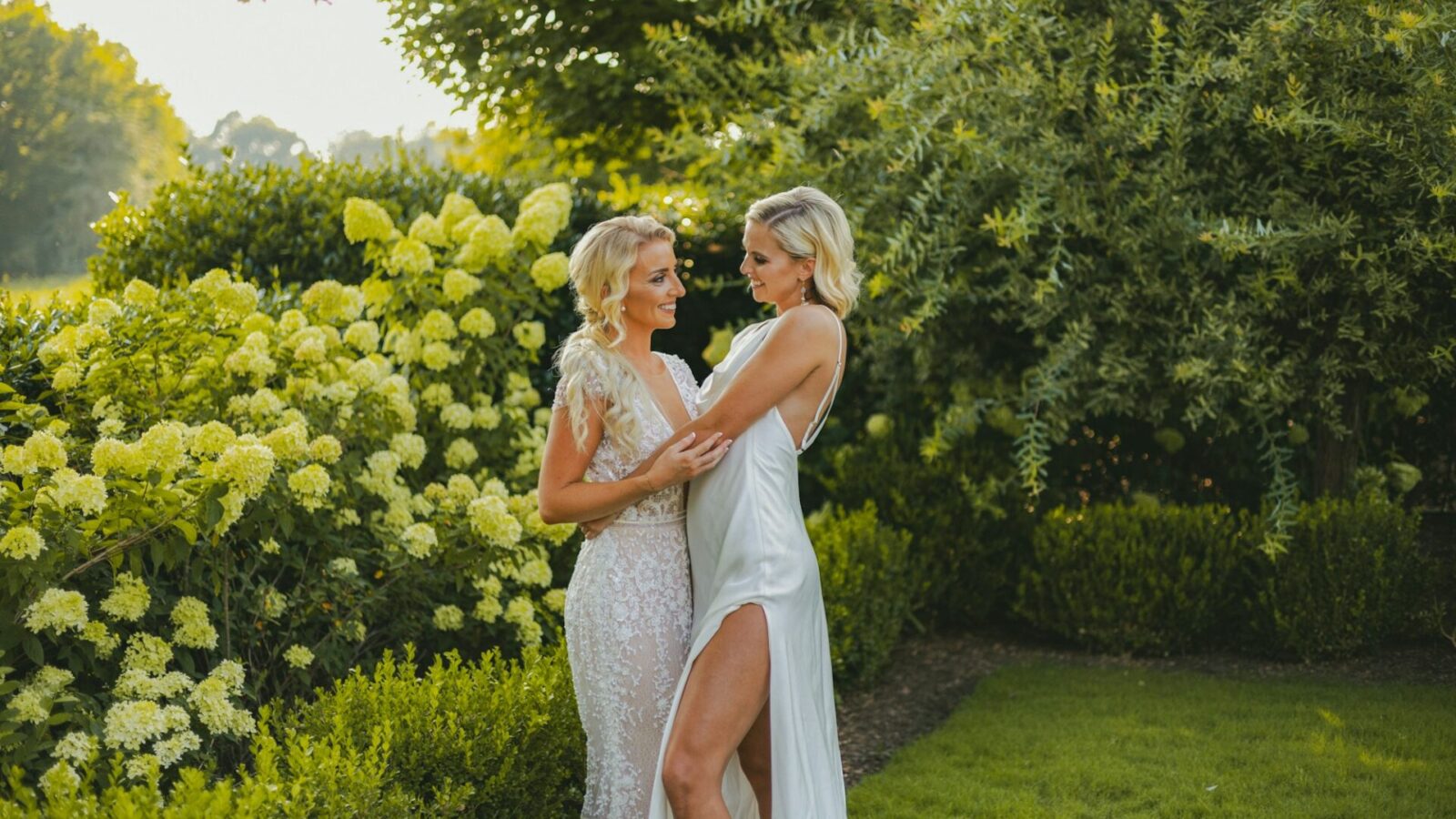
Photo: Brooke Balentine on Unsplash