Planning a lesbian wedding starts with three decisions: where you will legally marry, which venue will welcome you both, and what kind of day you want, from a small register office ceremony to a weekend with everyone you love. This guide walks you through each stage for the UK and the US, with honest advice on outfits, proposals, the wedding party and the traditions two brides can keep or rewrite.
The short answer
- Same-sex marriage is legal in all four UK nations and in every US state.
- In the UK you give notice to the registrar at least 28 or 29 days before the wedding. Our guide to same-sex marriage in the UK has the steps.
- In the US you apply for a marriage licence where the ceremony takes place, and the rules vary by state. See our US marriage licence guide.
- Book the venue first, then photographer, celebrant, hair and make-up, and outfits.
- You do not both need to wear dresses, walk an aisle or be given away. Every part of the day is yours to design.
Is a lesbian wedding legal where you want to marry?
Yes, across the UK and in every US state. The paperwork is shorter than most couples expect, and the steps depend on where the ceremony takes place.
- In the UK you give notice to the registrar at least 28 or 29 days before the wedding, then marry in front of two witnesses. If you are already civil partners, you can convert your partnership into a marriage instead, as our guide to civil partnership conversion in the UK explains. For the full process in England and Wales, Scotland and Northern Ireland, read our guide to same-sex marriage in the UK.
- In the US you apply for a marriage licence from the clerk’s office where you will marry, then hold the ceremony before it expires. Our guide to getting a marriage licence as a same-sex couple covers waiting periods, witnesses and officiants.
If you would like a humanist or independent celebrant, know that humanist weddings are legally binding in Scotland and Northern Ireland but not yet in England and Wales, where you need a short civil ceremony as well. Browse celebrants who work with same-sex couples.
Planning a wedding abroad? Check that the country allows same-sex marriage, whether it requires residency, and how your marriage will be treated when you come home. Our list of countries where same-sex marriage is legal is a useful first check, and our guide to the pros and cons of a destination wedding helps you decide.
Big wedding, small wedding or elopement
Decide the scale before anything else, because it shapes every later choice. A large wedding brings everyone together but needs a long lead time and a bigger budget. A small wedding, with a register office ceremony and a dinner for close friends, is easier to book at short notice and leaves more for the honeymoon. An elopement, just the two of you and a photographer, can be the most personal of all, and you can still throw a party for everyone afterwards.
The proposal and the rings
For two women there is no rule about who asks. Some couples take turns, some agree to propose to each other on the same day, and some decide together over dinner and skip the surprise. If you are planning a proposal, our guide to engagement ring styles for a lesbian proposal covers everything from solitaires to bands, and our engagement ring alternatives are worth a look if a traditional ring is not for you.
Many couples now have two engagement rings, or one engagement ring and a matching band for the other partner. For wedding rings, you can match, coordinate the metal, or choose completely different styles. Browse wedding jewellers who design for same-sex couples.
Set a budget you both agree on
Money is the conversation most couples put off, and the one that makes every other decision easier. Before you look at a single venue, sit down together and agree three things.
- Your total. Decide what you can spend without borrowing, and whether family will contribute. If they will, agree whether that comes with any expectations about the guest list.
- Your priorities. Each of you picks the two or three things that matter most, whether that is the photographs, the food, the outfits or the honeymoon. Spend there, and save elsewhere.
- Your guest count. Numbers drive cost more than anything else, because they decide the size of the venue, the catering and the drinks.
Keep a shared spreadsheet, add every quote and deposit as it comes in, and keep a little in reserve for the costs that always appear late, such as alterations and suppliers’ travel.
A timeline that works
- 12 to 18 months before: agree the size of the wedding and a budget, choose a region, and book the venue.
- 10 to 12 months: book the photographer, the celebrant or registrar, and a planner if you want one.
- 8 to 10 months: send save the dates; book hair and make-up, florist, caterer and music.
- 6 to 8 months: order dresses or suits, as both can take months to make and alter.
- 3 months: send invitations, give notice or apply for your licence, book the honeymoon if you have not already.
- The last month: final fittings, hair and make-up trial, final numbers and the order of the day.
For a task-by-task list, use our wedding planning checklist.
Choosing a lesbian-friendly venue
You want a venue that does more than accept your booking. Look for a team that has hosted weddings for two brides, uses neutral wording in its contracts and paperwork, and briefs its staff so nobody asks where the groom is.
Ask each venue:
- How many weddings for two brides have you hosted, and can we see photos from one?
- Where can the ceremony take place, and is the venue licensed for it?
- Are there two getting-ready rooms, so we can keep the first look a surprise if we want to?
- Is the venue exclusive use on our day?
- Can guests stay on site or close by?
Browse our full list of LGBTQ+ friendly wedding venues, or filter by style: country hotels and houses, vineyards, outdoor venues, woodland settings and unique venues. Or search by place in the UK and the US. Our tips for choosing a lesbian-friendly venue go into more detail.
What to wear
Two dresses, two suits, a suit and a dress, a jumpsuit, a tuxedo with a train: every combination works. The questions that matter are practical.
- Will you match or contrast? Some couples shop together, some keep their outfits a secret until the day.
- How much time do you need? Made-to-order dresses and tailored suits can take six months or more, plus alterations.
- Will you change for the evening? A second outfit for dancing is common and practical.
Our guides cover this in depth: how to choose a lesbian wedding outfit, wedding suits for women and finding the right dress for curvy brides. When you are ready to shop, browse wedding attire and tailors and hair and beauty specialists.
Hair and make-up for two brides
With two brides getting ready, timing becomes the main challenge. Decide early whether you will share one artist, book a team, or have one of you do your own.
- Book a trial each. Do it around eight weeks before the wedding, ideally on a day when you can wear the look out for dinner and see how it lasts.
- Work back from the ceremony. Give the artist your ceremony time and the number of people they are getting ready, and let them set the schedule. Allow extra time for photographs of you both getting ready.
- Getting ready apart or together. Separate rooms keep the first look a surprise. One shared room makes for relaxed, funny photographs. Either is right.
- Plan the evening touch-up. Ask whether the artist will stay for a refresh before the evening, or leave you a small kit.
Browse wedding hair and make-up artists who work with same-sex couples.
Photographers who know how to photograph two brides
Ask to see full galleries from weddings with two brides. Look at how the photographer poses you together, whether both of you get equal time, and whether the posing feels like you rather than a copy of a heterosexual template. If one of you prefers not to be photographed in a certain way, say so in the first meeting. Our questions to ask your wedding photographer are a good place to start, and you can find wedding photographers and videographers near your venue.
The ceremony
Walking in
With two brides, there are many ways to arrive:
- You walk in together, hand in hand.
- You walk one after the other, each with a parent or someone you love.
- You arrive from two sides and meet in the middle.
- One of you waits at the front and the other walks in, and you swap roles for the exit.
Vows
Personal vows work best when they are short, specific and true. Agree on roughly how long they will be, and decide whether you will hear them for the first time at the ceremony. A shape to adapt:
“You are the person I want to tell everything to first. I promise to be honest with you, to make room for your dreams, and to hold your hand through whatever comes. Today I choose you, and I will keep choosing you.”
For readings, see our wedding reading ideas.
Your wedding party
Bridesmaids, a maid of honour, a man of honour, best women or a mixed group of friends: you choose the titles and the people. Give each person a clear job and tell them early. Our guides on bridesmaids’ duties, the maid of honour at an LGBTQ+ wedding and writing a maid of honour speech are useful to share with them.
For the hen do or bachelorette party, decide whether you want one celebration together or two separate ones. See how to plan a lesbian hen do and how to plan a lesbian bachelorette party.
Guests and family
Build the guest list before you book the venue, as numbers decide the room. For tricky decisions, read who to invite to your wedding.
If some family members are not supportive, you can still have a joyful day. Tell the people closest to you before anything is announced, ask a friend to look after anyone who may need it, and keep the final say on the guest list and the seating. You do not owe anyone an invitation.
The reception and the details
- Speeches: you may both want to speak. Agree the order with whoever is hosting, and keep each speech to a few minutes.
- First dance: choose a song you both love. Our first dance songs are a good starting point.
- Bouquets and flowers: two bouquets, one shared bouquet, buttonholes or none at all. Browse wedding florists.
- Gifts and favours: for ideas, see our lesbian wedding gift ideas and wedding favour ideas.
Traditions to keep or rewrite
Some traditions suit two brides and some do not. Keep the ones that mean something to you.
- Being given away: many brides skip it, or are walked in by both parents, a sibling or a friend.
- The bouquet toss: keep it, swap it for a bouquet given to a special guest, or drop it.
- Something borrowed, something blue: easy to keep and lovely in photos.
- Not seeing each other before the ceremony: a private first look gives you a quiet moment together and frees up time for photos.
- Surnames: one name, both names, a new name, or no change. There is no expected choice.
After the wedding: names and paperwork
If either of you is changing your name, start soon after the wedding. In the UK your marriage certificate is usually all you need to update your passport, driving licence, bank and employer, so order a few copies on the day. In the US, the process starts with certified copies of your marriage certificate, then your Social Security record, then your driving licence and passport. Some couples keep their own names, some double-barrel and some create a new shared name; a new shared name may need a formal name change, so check the rules where you live.
It is also worth updating your wills, pensions and insurance policies, and telling your workplace, so that your marriage is recognised everywhere it should be.
Planning a destination wedding
If you are marrying abroad, plan for more lead time and fewer surprises. Visit the venue at least once if you can, and work with a local planner who has hosted same-sex weddings in that country. Give guests plenty of notice, ideally a year, so they can budget for flights and time off. Many couples keep the legal ceremony at home and hold a symbolic ceremony abroad, which avoids paperwork in another language and another legal system. Whatever you choose, check how welcoming the destination is for two women travelling together, and keep the guest list to people who will genuinely enjoy the trip.
The honeymoon
Decide early what kind of honeymoon you want: a beach and a book, food and cities, or adventure. Check how welcoming your destination is for two women travelling together, not just whether it is legal, and look at local rules and entry requirements before you book. Our sister travel company Out Of Office designs tailor-made trips for LGBTQ+ couples, and its ideas for honeymoons for two brides range from overwater villas to slow road trips.
Keep the planning enjoyable
Split the planning by strengths rather than evenly, agree a budget you can both live with, and protect time together that has nothing to do with the wedding. Our tips on stress-free wedding planning help when the to-do list grows. When you are ready, browse LGBTQ+ friendly venues and send your first enquiries: every venue and supplier on Gay and Lesbian Weddings welcomes same-sex couples.
Frequently asked questions
Is lesbian marriage legal in the UK and the US?
Yes. Two women can marry anywhere in the UK and in every US state. In the US, the Respect for Marriage Act also means every state and the federal government recognise your marriage, wherever it took place. Our guides to marrying in the UK and getting a US marriage licence explain the steps.
Do both brides have to wear a wedding dress?
No. You can both wear dresses, both wear suits, or one of each, and many couples change into a second outfit for the evening. Choose what makes each of you feel most like yourselves; our guide to choosing a lesbian wedding outfit walks you through the options.
Who walks down the aisle at a lesbian wedding?
Whoever you like. You can walk in together, one after the other, each with someone you love, or from opposite sides to meet in the middle. Some couples skip the aisle completely.
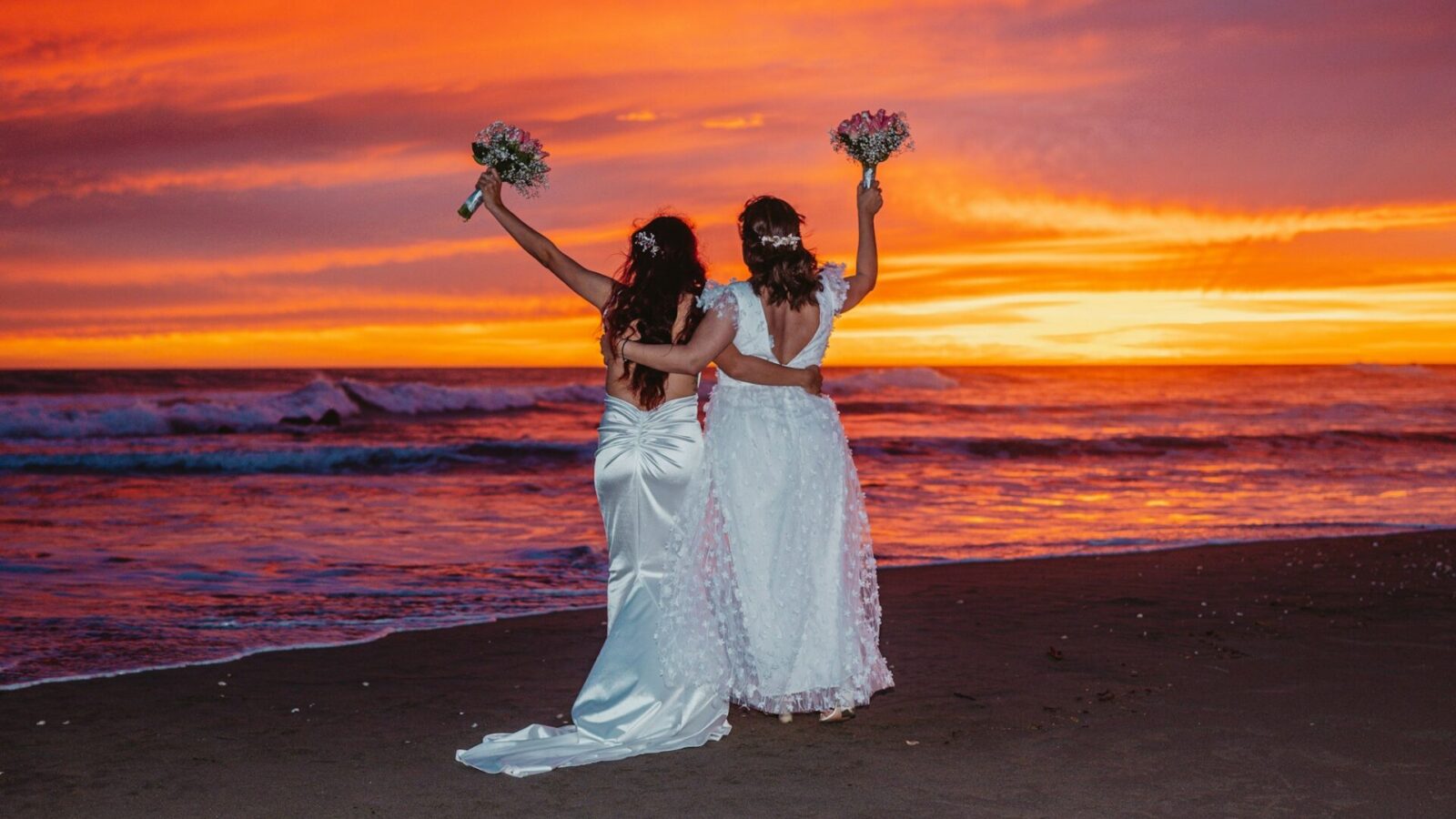
Photo: Fotógrafo Samuel Cruz on Unsplash