A gay wedding is planned in the same order as any other wedding: you decide where and when you can legally marry, book a venue that welcomes you both, choose suppliers who understand your day, then shape a ceremony and celebration that fit the two of you. This guide takes you through each step for the UK and the US, with the questions to ask and the traditions you are free to keep, change or drop.
The short answer
- Same-sex marriage is legal across the UK and in every US state.
- In England and Wales you give notice at your register office at least 29 days before the wedding, and you need two witnesses on the day. See our guide to same-sex marriage in the UK.
- In the US you apply for a marriage licence from the clerk where you will marry; waiting periods and expiry dates vary by state. See our US marriage licence guide.
- Book the venue first, then the photographer, celebrant and any planner. Popular dates go 12 to 18 months ahead.
- Ask every venue and supplier how many same-sex weddings they have worked on, and whether their forms and contracts use neutral wording.
- There is no fixed order of service for two grooms. You choose who walks in, who speaks and who stands beside you.
Where you can legally marry
The first decision is a legal one, because it decides how much paperwork you have and how far ahead you need to start. Same-sex marriage is legal across the UK and in every US state, and the steps are simpler than many couples expect.
- In the UK you give notice to the registrar at least 28 or 29 days before the wedding, depending on where you live, then marry in a civil or religious ceremony in front of two witnesses. Our step-by-step guide to same-sex marriage in the UK covers England and Wales, Scotland and Northern Ireland, including the documents to bring.
- In the US you apply for a marriage licence from the clerk’s office where the ceremony will take place, then marry before it expires. Our guide to getting a marriage licence as a same-sex couple explains waiting periods, witnesses and officiants, with New York and California as examples.
If a humanist or independent celebrant matters to you, check the rules early. Humanist ceremonies are legally binding in Scotland and Northern Ireland, but in England and Wales you need a short civil ceremony as well, which many couples hold at the register office a day or two before. Browse wedding officiants and celebrants who work with same-sex couples.
Marrying abroad
If you are thinking about a wedding overseas, check two things before you fall for a venue: whether the country allows same-sex marriage, and whether a marriage there is recognised at home. Some countries allow marriage only for residents, and some offer civil unions rather than marriage. Our list of when gay marriage was legalised in different countries is a good starting point, and our guide to the pros and cons of a destination gay wedding helps you weigh it up. Many couples hold the legal ceremony at a register office at home and the celebration abroad.
Set a budget you both agree on
Before you look at a single venue, agree three things together: the total you can spend without borrowing, the two or three things that matter most to each of you, and roughly how many guests you want. Numbers drive cost more than anything else, because they decide the size of the venue, the catering and the bar. If family are contributing, agree early whether that comes with any expectations about the guest list.
Keep one shared spreadsheet with every quote, deposit and due date, and leave a little in reserve for the costs that always appear late, such as alterations, suppliers’ travel and extra hours at the end of the night.
Small weddings and elopements
A big wedding is not the only way. Many couples choose a register office ceremony with two witnesses and a long lunch, or an elopement with a photographer somewhere that means something to them. A small wedding is often easier to book at short notice, gives you more choice of venue and frees budget for the honeymoon. If you go small, you can still hold a party for everyone later.
Set your timeline
Most gay weddings come together over 12 to 18 months. A shorter engagement works too, especially for a weekday or winter date. A simple order of work:
- 12 to 18 months before: agree a guest count and a rough budget, choose the region, and book the venue.
- 10 to 12 months: book the photographer, celebrant or registrar, and any planner.
- 8 to 10 months: send save the dates, book caterers, music and florist.
- 6 months: order suits or outfits, plan the honeymoon, book transport.
- 3 months: send invitations, give notice in England and Wales once you are inside the 12-month window, order rings.
- The final month: confirm numbers, write vows and speeches, agree the order of the day with the venue.
Our gay wedding planning checklist breaks this down task by task.
Choose an LGBTQ+ friendly venue
The venue shapes everything else: the date, the guest count, the style and often the suppliers. Being legally able to host your wedding is the minimum. What you want is a team that has done it before and treats your wedding exactly as it treats every other.
Questions worth asking every venue:
- How many same-sex weddings have you hosted, and can we speak to one of those couples?
- Do your contracts, forms and menus use neutral wording, or do they assume a bride and a groom?
- Are you licensed for civil ceremonies, and where on site can the ceremony take place?
- Do you have exclusive use, so no other wedding or event shares the day?
- Which suppliers do you recommend, and do you require us to use any of them?
- Is there accommodation on site or nearby for guests?
Start with our directory of LGBTQ+ friendly wedding venues, then narrow by style: barn and farm venues, manor houses, castles, boutique hotels or beach and coastal venues. You can also browse by place, across the United Kingdom and the United States. For a deeper look at the questions above, read our tips for choosing a gay-friendly wedding venue.
Find suppliers who understand your day
Every supplier who works on your wedding sees you at close quarters, so it is worth taking the time to find people who are relaxed, experienced and on your side.
Photographer and videographer
Look at full galleries of same-sex weddings, not just a portfolio page. Notice whether the posing looks natural for two men, whether both of you get equal attention, and whether the photographer catches the family moments as well as the couple shots. Our ten questions to ask your gay wedding photographer will help in the first call, and you can browse wedding photographers and videographers by area.
Celebrant or registrar
A registrar conducts the legal ceremony in a set form. An independent or humanist celebrant writes a ceremony around your story, with your choice of readings, rituals and vows. In England and Wales a celebrant-led ceremony needs a separate legal ceremony too.
Planner
A planner is worth the investment for a destination wedding, a large guest list or a busy year at work. Ask how they handle family tension and how they brief other suppliers. Browse wedding planners.
Suits, florist, cake and music
Decide early whether you will match, coordinate or dress completely differently, as tailoring can take several months. Our guide to gay men’s wedding suits covers fit, fabric and colour. For the rest of the day, browse florists, cake makers and entertainment, and read how to choose a DJ for your gay wedding.
Shape your gay wedding ceremony
Much of the traditional ceremony was written around a bride being given away. Two grooms have the freedom to start from scratch.
Who walks down the aisle
Common choices for two grooms:
- You walk in together, side by side.
- You each walk in one after the other, from the back or from opposite sides.
- Each of you walks with a parent, a sibling or a close friend.
- You are both waiting at the front and your wedding party walks in.
- There is no aisle at all, and your guests stand in a circle around you.
Vows
Registrars in England and Wales include the legal words, and most allow you to add vows of your own. A celebrant will help you write them from scratch. Keep them under two minutes each and agree the length with each other in advance. A simple shape that works:
“I choose you today because you make every ordinary day feel like home. I promise to listen, to laugh at the right moments, and to keep choosing you, in the easy years and in the hard ones.”
For readings that suit two grooms, see our gay wedding reading ideas.
Rings
Whether you buy matching bands or choose rings that suit each of you is entirely your call. Some gay men wear their ring on the right hand, a custom with a long history in the community, which our piece on why some gay men wear wedding rings on the right hand explains.
The wedding party and the people around you
You can have best men, best women, a person of honour, or no wedding party at all. Choose the people who will turn up for you, then give each of them a clear role. Our guides to the best man and best woman and groomsmen’s duties set out who does what, and how to write a best man’s speech for a gay wedding is worth passing to whoever is speaking.
Before the wedding, there is the stag do. Plan it for the people who will actually enjoy it, which might mean one joint weekend or two separate ones. See how to plan a gay stag do and, for US readers, how to plan a gay bachelor party.
Guests, family and invitations
Start the guest list early, as it decides the size of venue you need. Our guide on who to invite to a gay wedding helps with the difficult calls.
Some couples have family members who are unsure, or who will not attend. You do not owe anyone a seat at your wedding, and you do not need to resolve every relationship before the day. Practical steps that help:
- Tell close family your plans before the save the dates go out, so nobody hears it second hand.
- Give a trusted friend the job of looking after anyone who may find the day difficult.
- Seat supportive people near the front, and keep the plan for the day in your own hands.
- Brief your venue and photographer quietly if there is someone to keep an eye on.
On the invitations themselves, list your names in whichever order you like, and say whose families are hosting if that matters to you. Plain, warm wording ages better than anything clever.
The reception
The reception is where your personalities show most. A few decisions to make early:
- Speeches. You might both speak, or one of you, or neither. Many couples now have speeches before the meal, so nobody spends dinner nervous.
- First dance. Pick a song that means something to you both. For ideas, see our first dance songs and our gay wedding playlist.
- Cake. Read our round-up of gay wedding cake trends, and ask your baker how they decorate the top tier.
- Pride. Some couples bring in a rainbow detail, others prefer to keep it subtle. Our ideas for showing your pride at your wedding range from small touches to full colour.
For more inspiration, browse our LGBTQ+ reception ideas and our gay wedding themes.
Traditions to keep, change or drop
You are not bound by any tradition. A useful test is whether it means something to either of you. Traditions that two grooms often keep, change or drop:
- Being given away: often dropped, or changed to both sets of parents walking you in.
- Not seeing each other before the ceremony: many couples choose a private first look instead, which gives the photographer more time.
- Something old, something new: easy to keep as a pocket square, a cufflink or a family watch.
- The cake cut and first dance: usually kept, because guests love them.
- Taking one surname: some couples keep their own names, some double-barrel, some choose one. There is no expected answer.
Plan the honeymoon
Book the honeymoon early, especially if you want a particular villa or a peak-season date. Think about how you want to feel after the wedding: rested, adventurous, or somewhere in between. Look at how welcoming a destination is in practice, not just on paper, and check the entry and local rules for the places you plan to visit. Our sister travel company Out Of Office plans tailor-made trips for LGBTQ+ couples, from beach villas to city breaks, and its guide to gay destination weddings and honeymoons is a good place to start if you are combining the two. You will also find ideas in our gay honeymoon destinations.
Look after yourselves
Planning a wedding is a project on top of everything else in your lives. Agree who leads on which decisions, set one evening a week aside when wedding talk is off the table, and keep the budget conversation regular rather than rare. Our tips on staying stress-free while planning a gay wedding help, and so does remembering that the day is about the two of you, not a checklist.
When you are ready to start, browse wedding venues near you and send your first enquiries. Every venue and supplier on Gay and Lesbian Weddings welcomes same-sex couples.
Frequently asked questions
Is gay marriage legal in the whole of the UK and the US?
Yes. Same-sex couples can marry in England, Wales, Scotland and Northern Ireland, and in every US state. In the US the Respect for Marriage Act also requires every state to recognise a same-sex marriage that took place in another state. Our guides to marrying in the UK and getting a US marriage licence explain the steps.
Can we have a religious gay wedding?
Yes, where the faith group has chosen to marry same-sex couples and the building is registered for it. The Church of England and the Church in Wales do not marry same-sex couples. Speak to the minister early, as the registration step can take time.
How far ahead should we book a gay wedding venue?
For a Saturday in spring or summer, 12 to 18 months ahead is common, so start with our LGBTQ+ friendly wedding venues early. Weekday and winter dates are often available at much shorter notice, and some venues release late dates a few months out. Our winter gay wedding ideas help if you choose the quieter season.
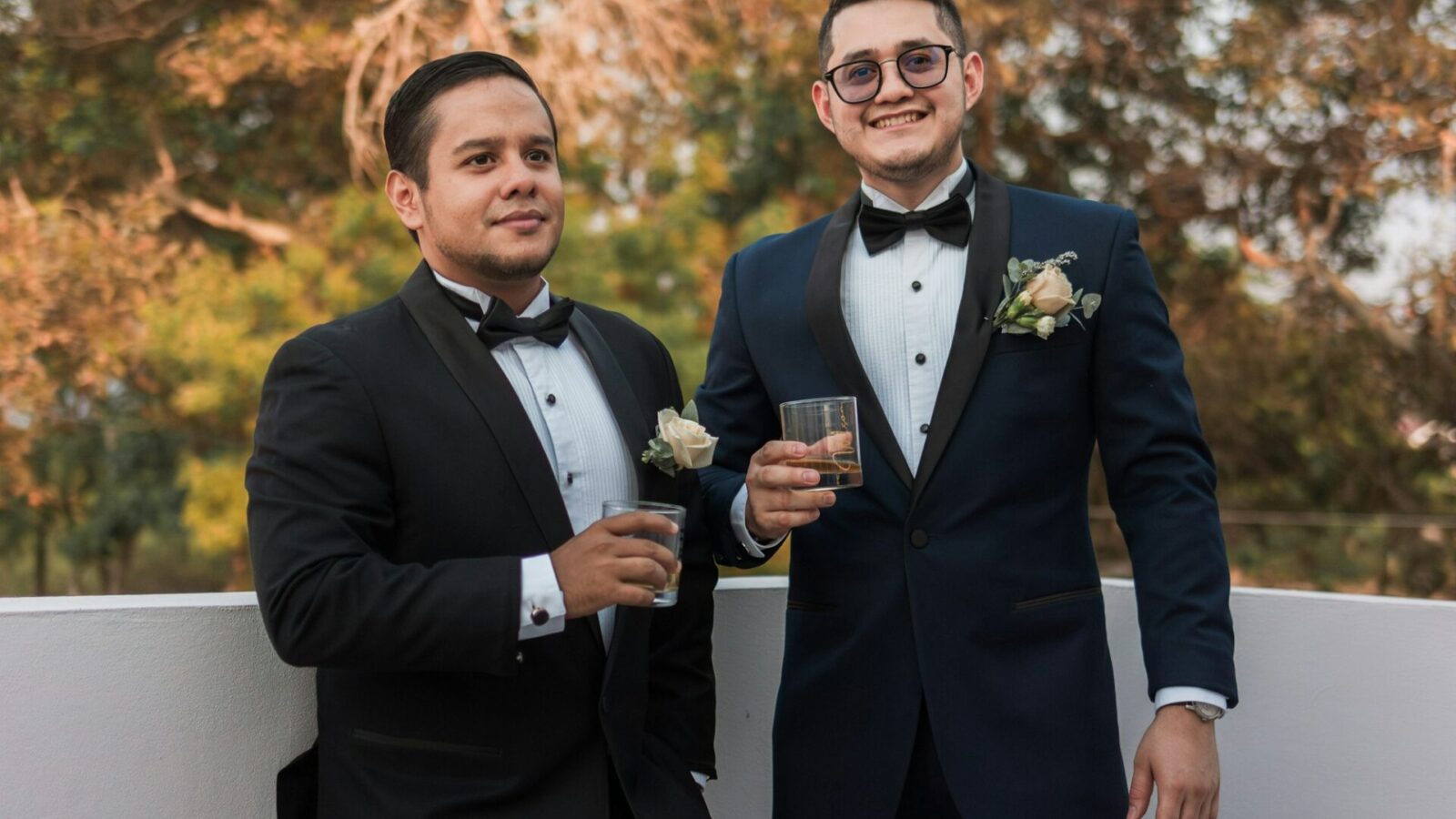
Photo: Manuel Figueroa on Unsplash